Childhood Alopecia: Causes and Treatments in Children
Hair loss occurs for many reasons and affects people of all ages. Although it is not common, hair loss in children can be traumatic for both the child and the parents. Fortunately, most children who suffer from childhood alopecia completely restore their scalp. Almost 60% of cases recover their hair through hair treatments and anti-hair loss cosmetics. Depending on the type of alopecia the child suffers from, total recovery from hair loss to new growth can vary from a few weeks to over a year.
What all childhood alopecias have in common is hair loss from the head. Regardless of the symptoms, the type of hair loss, and whether there is itching or redness, all children with alopecia experience, to a greater or lesser extent, seeing their hair fall from their heads.
The most common causes of childhood alopecia
Next, we will detail the causes of alopecia in children. We will also detail each type of childhood baldness, its causes, and the treatments that give the best results.
Fungal infection
 One of the common causes of childhood alopecia is fungal infections. This is a fungal condition called dermatophytosis or scalp ringworm. It causes temporary hair loss in children. Fortunately, once the infection is eliminated, the hair resumes its growth.
Like other illnesses during school ages, childhood alopecia due to fungi is contagious. The most common origin of the infection is contact at school. The symptoms of a fungal infection on the scalp in young children are:
- Persistent itching.
- Pain in the affected areas with signs of redness and swelling.
- Hair loss in patches or bald spots.
- Scaly skin on the scalp.
Autoimmune Causes or Alopecia Areata in Children
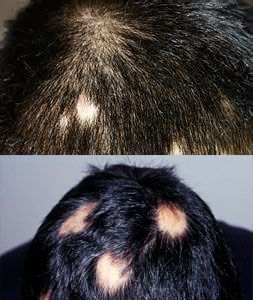 The causes that lead to a decrease in defenses are those that cause the appearance of alopecia areata in children. In some cases, it is considered an autoimmune disease. Children suffer hair loss in patches or chunks. This type of childhood baldness has symptoms similar to those of a fungal infection, only in this case, the hair follicles are inflamed due to non-fungal causes.
In most cases, childhood patchy baldness subsides with treatment. After a few months, hair growth can be observed as if the disease had not acted.
The group of children most prone to this type of baldness are those with chronic and temporary autoimmune diseases, thyroid disorders, vitiligo, and allergies to chemicals. In some patients, alopecia areata has been detected as a reaction following environmental poisoning.
The symptoms of childhood alopecia areata are:
- Accelerated hair loss.
- Circular or patchy bald spots.
- The bald spots can be painful, red, and inflamed.
Traction Alopecia
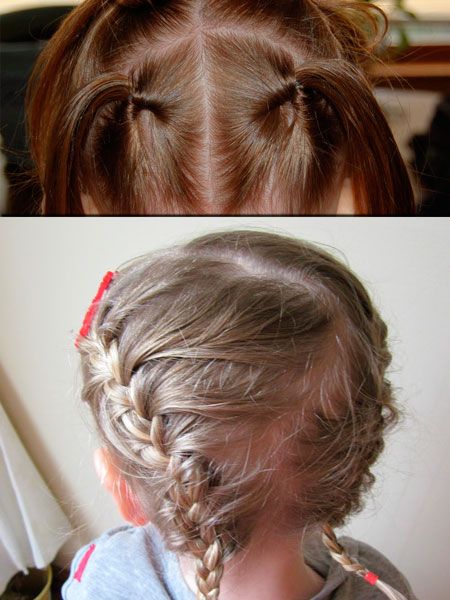 This is one of the most common types of alopecia in the pre-adolescent age group. Traction alopecia in children is not a disease or condition caused by viruses or pathogens. As its name suggests, it is caused by repeated pulling of the hair. It can be due to wearing very tight ponytails and braids, which cause constant and gradual hair tension. It is also common to suffer baldness due to tics and habits that children frequently have. If the problem of the tic or habit of pulling out hair persists, the child may be diagnosed with trichotillomania. Early detection in these cases is important to avoid extensive bald areas. The effects of treatment are slow, but when treated with minoxidil, the hair begins to occupy the space where childhood baldness was present.
Telogen Effluvium
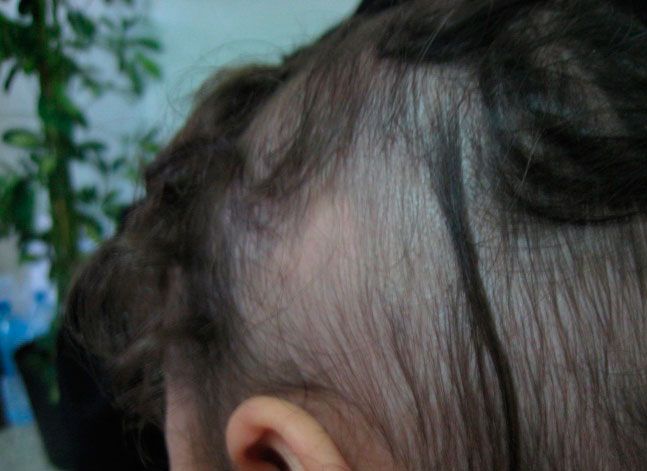 As in adults, the healthy hair growth cycle in children consists of four stages. The anagen, catagen, telogen, and exogen phases. When a child’s hair enters the telogen phase, there should be a renewal of hair from the root. Gradually, the tip of each hair begins to protrude from the base of the hair follicle, which is located in the scalp. Childhood telogen effluvium appears at this moment. This is when increased hair loss is perceived due to the lack of hair renewal. The process by which new hair grows is halted.
The symptoms of telogen effluvium in children include the temporary closure of hair-producing follicles, preventing hair renewal. This shows a significant reduction in hair density.
The causes of childhood telogen effluvium include taking medications, stress factors, or psychological reasons that abruptly disrupt the hair growth cycle. The scalp with this condition stalls the hair follicles in the anagen phase, resting, thus halting growth from the hair root.
Fortunately, once the medications or stress factors are eliminated, alopecia in the child decreases until it completely disappears.
Anagen Effluvium
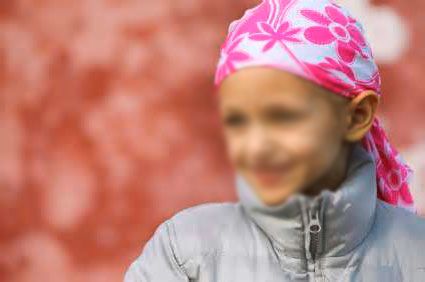 This type of childhood alopecia is known due to chemotherapy treatments in both children and adults. Hair loss is experienced in the anagen phase and is due to taking medication to fight the disease.
As in some cases of telogen effluvium, anagen effluvium is caused by medications. Only the phase in which hair growth is halted is different. In this case, the hair should be born and grow continuously. In the normal growth cycle and during the anagen phase, hair grows without a resting phase.
Taking medications can disrupt the anagen hair cycle, thus halting growth. Fortunately, childhood anagen effluvium disappears when cancer treatment ceases.
Genetic Causes
 Other factors for alopecia in children are hereditary or genetic causes. These cause the rarest detected childhood alopecias. It is common for it to affect in adulthood.
Treatments for Childhood Alopecia
Depending on the type of alopecia the child has, the treatment consists of different medications and cosmetics.

If the cause is ringworm or fungi, then treatment with oral antifungals or antifungal lotions is required. Shampoo and gel with 2% ketoconazole are used for both seborrheic dermatitis and to eliminate fungal infections. This product can be used 2 or 3 times a week, although it is always recommended to use it under medical prescription as it can cause a rebound effect for seborrheic dermatitis.
In cases of childhood alopecia areata, various means must be used to alleviate its effects. Currently, there is no cure and generally the doctor recommends following a treatment for one year to see if it subsides.
Given its unknown origins and possibly caused by external factors, this is an adequate period in which the body can mitigate the effects of the agent causing the child’s alopecia and strengthen with hair medications. If it does not work, another strategy is chosen to try to locate the cause of the problem.
It is worth mentioning that this type of baldness affects each person differently. In some cases, the treatment for alopecia areata in children is sufficient to resume growth. Unfortunately, in others, it does not work or after a brief period in which it seemed to work, the hair falls out again.
The medications used to treat childhood and adult alopecia areata are usually topical corticosteroids.
Treatment to cure childhood telogen effluvium is not necessary. Once the stress causes are overcome or the medications causing the child’s baldness are stopped, the hair grows naturally. Depending on the progress, total recovery may take months. The positive aspect is that it disappears completely.
The remedy for traction alopecia is to eliminate ponytails, braids, or situations that cause hair tension. In cases of trichotillomania, the treatment consists of psychotherapy. It is important for the child’s health to understand the reasons why they enter a cycle of nervous tics that lead them to repeatedly pull their hair. In some cases, the solution involves taking antidepressants or anxiolytics.
The cure for genetic childhood alopecia is unknown. Currently, there is human genome research pointing towards stem cell treatments, although these require development time.
The way to treat anagen effluvium is to end the treatment that caused it. As soon as this happens, it subsides.
Something common when hair starts to grow back with anagen effluvium is that it takes on a different color and strange texture. Over time, the hair tends to return to its previous state. That is, it resumes an appearance similar to the period before the treatment that caused the alopecia. In some cases, it is possible to follow an alternative treatment to alleviate the symptoms of hair loss.