Hair Transplant FUE with Automated Technique
There are different ways to proceed with hair implants. The most common for many years has been through the manual extraction and manipulation of the patient’s follicles. The other, more recent, method uses robotic assistance to facilitate the FUE hair graft. These are two different approaches, one of which causes minimal damage to the scalp.
For some years now, it has been possible to use these two methods. The FUE technique “Follicular Unit Extraction” like many other hair surgery procedures has had constant evolution thanks to technological improvements. It does not leave linear scars and soon becomes imperceptible. People who receive this treatment are invisible to others, to the extent that it is not necessary to grow the hair to cover scars. The subject can wear their hair as short as they wish without fear of showing marks from the procedure.
Understanding the Technique
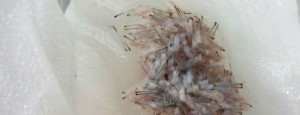 The FUE method involves using a 1mm punch to extract tiny follicles from the scalp. This technique extracts them individually, unlike the FUSS technique which extracts them in strips, causing more damage and pain for the patient. Additionally, FUSS is a hair surgery procedure where follicles are separated manually using a microscope.
Once the follicles containing hairs are extracted and separated, they must be grafted onto the patient’s scalp. This is the unifying step between the different FUE and FUSS techniques. After the surgery, the grafts start growing within 3 to 4 months. To enjoy the fullness of the healthy hair’s natural growth cycle, one must wait a year. This is when the truly wonderful results of this treatment can be seen, as the hair will continue to grow for a lifetime.
ARTAS VS Neograft
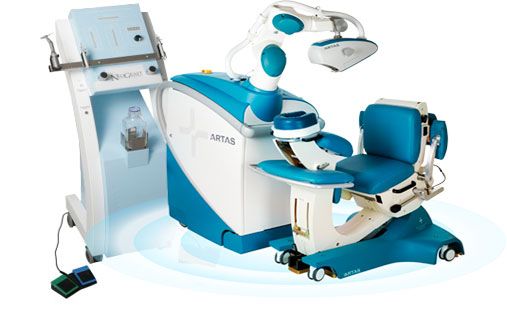 There are two techniques based on the use of robots for microsurgery: ARTAS and Neograft. Both require shaving the hair for the FUE hair graft to number 1, meaning leaving the hair 1mm long. Although it might seem inconvenient, having to cut the hair is a great advantage as it facilitates the manipulation of the area, improves aeration of the micro-wounds, and speeds up healing.
The advantage of using robots is that the dermal puncture is exact and faster. Around 1000 hairs can be extracted in an hour to be transplanted into bald areas. A single session can last up to approximately 8 hours.
ARTAS does not require a surgeon’s intervention. The robot is programmed to extract the follicles through follicular unit mapping. In contrast, Neograft requires the intervention of a specialist who guides the robot in the most critical steps to give a natural appearance to the hair graft.
Which FUE Hair Graft to Choose?
Despite all the marketing by ARTAS and Neograft, do not be deceived. Both techniques have their advantages, and both help with extraction speed and improving the condition of the extracted follicles, which receive less damage. However, the success of a hair transplant largely depends on how the procedure is performed, the surgeon’s skills in creating a natural effect, and the quality of the patient’s hair.
One of the most important steps in performing an FUE graft is the way the surgeon implants the hairs: angle, irregular pattern to give a non-linear natural look, follicle depth, final hairline design, and variable density across the scalp. These aspects greatly contribute to achieving aesthetically pleasing and satisfactory results for the patient.
For now, the experience of a skilled surgeon cannot be replaced. Their expertise and creativity in performing an FUE hair graft are fundamental.