What is traction alopecia, treatment, causes, and symptoms
The traction alopecia is the loss of hair as a result of repeatedly pulling the hair. It can be intentional or unconscious. It occurs due to twisting, rubbing of objects against the scalp, pulling the hair through hairstyles, or trichotillomania.
This type of alopecia affects women, children, and men, although in the latter the incidence rate is much lower. Temporary in most cases, if not treated in time it can lead to permanent baldness.
Causes
- Hairstyles.
- Hats, clothing, and protection.
- Trichotillomania.
Hairstyles

A few years ago, the most striking cases occurred in the United States. Due in large part to the fact that in North America, African American people created elaborate hairstyles with braids and unimaginable designs, the incidence was mainly in the US. Currently, unfortunately, and largely due to globalization, the fashion for African American hairstyles where the hair is severely stressed has spread to most countries around the world.
In the last decade in Spain, cases of traction alopecia have increased significantly. This is due to the use of hairstyles that tighten the hair more than recommended. The tension causes the hair to gradually be pulled from the hair follicles and these, eventually, suffer damage.
Are hair extensions harmful for traction alopecia?
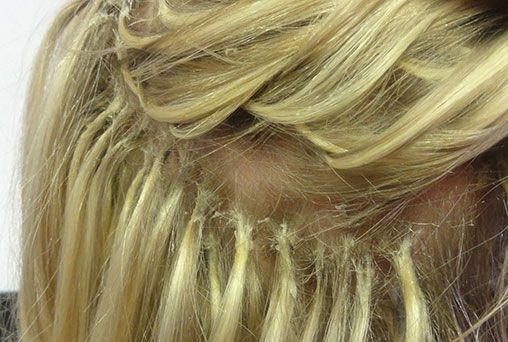 Although it is quite common to go to the hairdresser to get extensions, it is advisable not to use them for a prolonged period. It should be noted that these types of products add weight and movement and cause the scalp tissues to suffer. They are not accustomed to it and can be damaged. An exemplary case of traction alopecia is Naomi Campbell who, after years of using extensions, shows evident signs of hair loss, or the famous tennis player Serena Williams.
The best way to prevent traction alopecia with extensions is to avoid their use or limit it to the minimum possible. The larger the hairpiece, the greater the risk of causing damage.
Hats, caps, and head protection garments
The case of traction alopecia due to the use of hats or protective helmets is very rare. Normally, the manufacture of these accessories takes into account human physiology and basic safety and hygiene standards. In cases where these garments are used in incorrect sizes or the prevention standards provided by regulatory bodies for manufacturing the materials have not been considered, cases may appear.
Trichotillomania
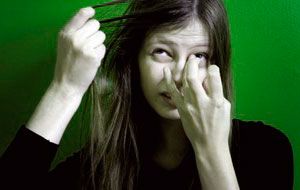 Another cause of traction alopecia is trichotillomania. This condition is more common in children than in adults, although it occurs in both cases, affecting both males and females equally.
Trichotillomania is a psychological disorder in which the repeated gesture of pulling and plucking hair results in well-defined bald patches. These actions can occur when suffering from depression, anxiety, and psychological disturbances.
The origin of trichotillomania is usually found in childhood traumas, family problems, misunderstanding, lack of adaptation to school, or stressful situations for both children and adults. In certain people, these realities favor the appearance of trichotillomania, which produces nervous tics as a way to release the stressful tension that plagues the subject. In trichotillomania, the act of pulling out hair is perceived by the patient as a liberating process and can sometimes even be pleasurable.
How to Detect Traction Alopecia in Time
One of the symptoms when hair is under too much tension is experiencing headaches at the end of the day. When hair is habitually tied in tight ponytails or switched to a braided hairstyle, the scalp may give warnings in the form of hair pain, not to be confused with Trichodynia. Ignoring these warnings and continuing with the same type of hairstyle, either by redoing it in the morning or not undoing it for days, can lead to hair loss. In some cases, the effects may appear some time after the scalp has been strained and the hair has been relaxed with a different hairstyle.
How to Avoid It
The way to avoid traction alopecia and heal its effects is by eliminating hairstyles that cause the sensation of discomfort from tension and headaches at the end of the day. The aim is to relax the scalp, and the best way to facilitate relaxation is to leave the hair loose. In cases where it is necessary to keep the hair tied for work reasons, ponytails can be done that allow some slack in the hair, meaning they do not cause tension or tightness in the scalp.
Method to Ensure the Hairstyle is Appropriate
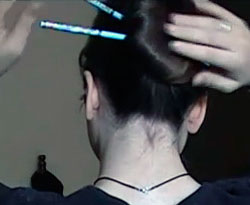 An easy test is to try to pass a pencil through the hair between the scalp and the elastic that makes the ponytail. If it is difficult, there is too much tension. In that case, it is recommended to loosen the ponytail. If even with relatively loose hair there is discomfort, it is best to leave it free for a while so it can strengthen and recover its vitality on its own.
Treatment
The first thing to do to recover hair from traction alopecia is to stop mistreating it, and the first step is to leave it alone for a while. Avoid dyes and abrasive chemical products. Hair can be naturally strengthened using nourishing masks after washing.
In addition to these basic principles for treating hair with low vitality, minoxidil can be used for a year. This is the period in which new hair units can be seen growing and the existing hair has strengthened, becoming thicker. Treatment with minoxidil and other treatments should always be recommended by a doctor.
For people with trichotillomania, the first step is to see a psychiatrist. Since it is a psychological illness or condition, a doctor specialized in behavioral disorders is the best professional to help redirect the habit of pulling out hair. Treatments commonly used include antidepressants, anxiolytics, or behavioral therapies with psychologists. This type of treatment can also be accompanied by minoxidil.
Do Treatments for Traction Alopecia Work?
Absolutely yes. When the causes that provoke it are resolved, most people can completely correct it.
For cases caused by hair pulling, it is relatively simple. Just change the hairstyle, and if the hair does not grow back, the described treatments can help.
In cases where trichotillomania is involved, recovery largely depends on the repair of the associated psychological disorder. In these cases, there is no average recovery time as the causes are very diverse.