Do you know the types of hair loss or why it falls out?
When hair loss is diagnosed, some of these indicators are usually identified: disruption in the natural growth cycle of healthy hair, structural damage, or disorders affecting the follicle.
Below we present the most common causes detected for hair loss in men and women:
- Disruption of the natural hair growth cycle.
- Hair breakage.
- Follicle disorders.
Hair Loss Due to Disruption of the Growth Cycle
A person’s healthy hair goes through different phases consecutively throughout life. Each hair separately goes through the life cycles that allow it to be born, grow, and die. These are three: anagen, catagen, and telogen.
In the anagen phase, the hair grows for several years; in the catagen phase, the hair rests for about twenty days; and in the telogen phase, the hair falls out, allowing for regeneration and new growth. This last phase, telogen, usually lasts about three months, meaning that from the time the hair enters the shedding mode until a new hair starts to grow, approximately three months pass.
Under normal conditions, between 15 and 20 percent of all the hair on the head is in the telogen phase, but not all falls out at once. Around 100 hairs shed from a healthy scalp daily, and just as many begin to grow. This happens continuously throughout life except when there are diseases affecting the hair, infections, or disorders that disrupt the growth cycle. When any of these situations exist, sometimes the telogen phase is paralyzed and stalled, preventing the follicles from entering the new cycle to produce hairs. This is where a problem arises if not addressed. Hair loss due to telogen effluvium can trigger almost total hair loss in a few months.
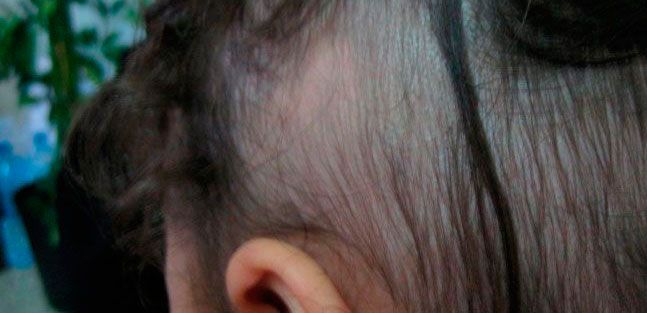
Diagnosis of Telogen Effluvium
When analyzing a healthy scalp, the hair renewal index is around 50%. When the percentage is lower in a study, it raises a red flag, and it can then be considered that there is alopecia due to telogen effluvium.
Causes of Telogen Effluvium
Generally, for the scalp to be stuck in the telogen phase, a traumatic situation must exist. The most common circumstances that disrupt the hair growth cycle are diseases, thyroid disorders, malnutrition, childbirth, and some aggressive drug treatments such as radiotherapy and chemotherapy.
Once these situations occur, hair loss can begin immediately or be delayed. It is important to note that not all hair enters the telogen phase simultaneously, so not all hair falls out at once. The hair in this phase is the one that falls and does not have renewal.
Treatment and Cure
To cure this type of hair loss, the only solution is to address the causes that provoke it. In the case of undergoing treatment for diseases, hair will not grow back until the treatment is completed. For thyroid disorders, imbalances need to be controlled. When hair loss is due to childbirth, once the woman recovers, the hair grows back without any treatment. Only a small percentage of cases detect irreversible hair loss due to chronic telogen effluvium.
Hair Loss Due to Breakage
This situation usually occurs when there is a lack of keratin in the body. This substance is a protein that makes up the structure of hair and nails. Rich in sulfur, it provides strength and vitality to hair.
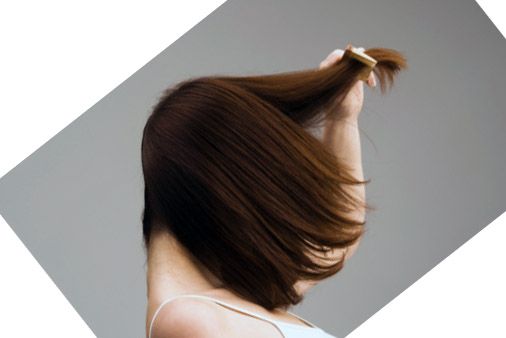
Causes of Hair Breakage
Extensions, dyes, straightening, curling, and some beauty treatments in hair salons can cause hair breakage if not used correctly.
As a general rule, hair relatively withstands daily aggressions well. Using nourishing masks is enough to revitalize it, but when attacked with chemical or abrasive products, it is irremediably damaged. Therefore, it is very important to be careful with certain trends and habits.
Bleaching: Hydrogen peroxide and chemicals for dyeing wear down the hair’s protective layer until the limit is exceeded. Not being careful with this technique can damage the structure. Whether due to excessive contact time or because the hair is not in the best condition when certain treatments are applied, it becomes damaged. Braids, ponytails, and extensions offer greater friction and extra effort that can lead to unwanted breakage.
Washing: Using certain shampoos irritates the scalp and unprotects the hair. Washing it too frequently can cause a higher number of fractures than normal. The recommended method for washing hair, especially when it is long, is to use nourishing masks after the shower. These provide the damaged hair with the necessary substances to regain health.
Combing: Excessive combing causes friction and pulling on the scalp and hair. Doing it too often ends up breaking more hairs than usual. Using smoothing creams speeds up combing, giving it a silky state that allows the brush to move smoothly.
Treatment for Hair Breakage
Healing hair when it has been mistreated requires changing how it is cared for. Hairstyles that keep it tense for a long time should be alternated with free styles that leave it loose to rest. To prevent hair breakage, tight hairstyles should be alternated with loose ones. If there is any follicle damage due to hairstyles, it is enough to let it rest to regain health. People who ignore these indications can reach the extreme of causing the appearance of the so-called traction alopecia.
In cases where breakage is caused by excessive combing, there is no other choice but to reduce it to a minimum. In these cases, it is advisable to gently rub the hair with shampoo without mixing it. Preventing tangles and knots is the first priority. Using smoothing masks facilitates combing, causing less pulling and friction with the brush. Additionally, using brushes with rounded tips prevents damage to the scalp.
Hair Loss Due to Follicle Disorders
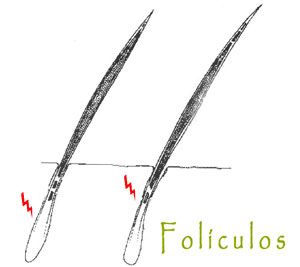 Here we can include different types of alopecia and scalp diseases. Scarring alopecia and traction alopecia are included.
Follicle disorders cause hair loss by directly attacking the root. It is at the root, in the hair follicle, where they act. This type of lesion is the most severe as it directly affects the hair’s reproductive organ.
Causes of Follicle Disorders
Various causes lead to hair loss due to poor scalp health. These include allergies that cause inflammation of the hair follicles, such as alopecia areata, scarring from damage or trauma like the aforementioned scarring alopecia, or bacterial infections.
Treatment for Follicle Disorders
Due to the multitude of disorders affecting the hair base, it is impossible to list all available treatments. However, it should be mentioned that the best treatments are those that limit and prevent scarring from progressing. Since the follicle becomes useless for hair reproduction when it scars, treatments aim to stop this symptom as soon as possible.