Resolve your doubts about diffuse alopecia
It is called diffuse alopecia the generalized hair loss with varying intensity depending on its type. This is a different alopecia from areata since the symptoms are not localized to a specific area of the scalp. Instead, the hair loss is spread throughout the head.
Also called telogen effluvium or androgenic alopecia with a diffuse pattern, it appears when the hair is in the resting phase, telogen phase. This is when there is a greater loss that exceeds 100 hairs per day. Since the hair is in the resting phase, there is no renewal.
Contents
Causes
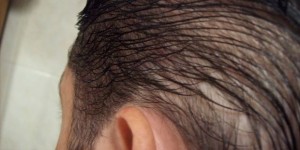 From an external point of view, it can be noted that the causes of diffuse alopecia are events that the body perceives as traumatic. The factors are varied, but some of them are stress or a prolonged stressful situation for the subject, illness, or the adverse effects of the medication used for treatment, and hormonal imbalances are also detected as main causes for this condition. In some cases, where a clear cause has not been identified and there is a severe eating disorder, a poor nutrient diet has been assumed as a possible origin.
Most common diseases that cause it:
- Thyroid metabolic disorders (hyperthyroidism, hypothyroidism).
- Some types of diabetes.
- Autoimmune diseases like systemic lupus erythematosus (SLE).
- Severe lung infections.
- Acute gastrointestinal diseases such as Crohn’s disease and ulcers.
- Syphilis.
- Eating disorders like anorexia and bulimia.
- Depression.
Internal causes that are not diseases:
- Childbirth.
- Menopause.
External causes:
- Stress.
- Chemotherapy and cancer treatments.
- Other medications for diseases.
Incidence of diffuse alopecia in women and men
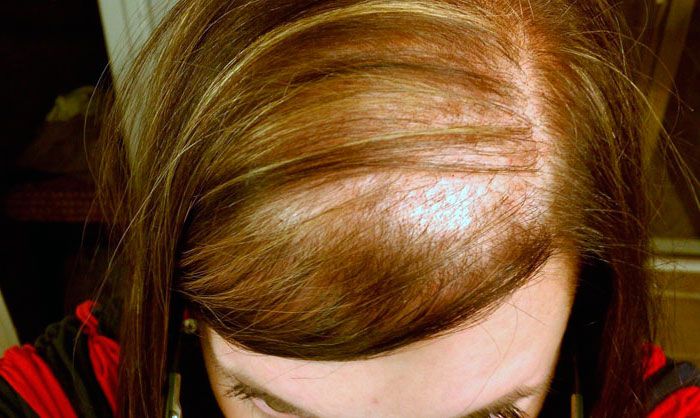
This is a disorder detected in both women and men. Since the most common causes are diseases, the percentage of women suffering from female diffuse alopecia is similar to that of men. The incidence rate in males is similar. Diseases like cancer, diabetes, thyroid disorders, etc., have similar rates, or at least not so different as to conclude that they are exclusive to women. Therefore, thinking that diffuse alopecia is a male issue is incorrect. It is often mistakenly confused with male pattern baldness. This is why it might be mistakenly thought that the percentage is higher in men.
How to act against diffuse alopecia due to stress
When situations have a strong stress component, the entire body suffers, although external signs like hair loss, dark circles under the eyes, weight loss, and even weight gain are more evident. To stop this process, it is necessary to eliminate the situations that cause anxiety. In cases where hair loss occurs due to nervous situations, instead of resorting to treatments based on Minoxidil and Finasteride, behavioral therapy is most recommended.
Treatment for diffuse alopecia: is there a cure?
Generally, when the cause of diffuse alopecia is corrected, it disappears. Symptoms persist while the body feels the aggression and has an imbalance. Hair loss stops when the causes are cut off at the root. But in some cases, this does not happen. When time passes, from 6 months to 1 year, and there is no apparent cause justifying the diffuse pattern hair loss, it is advisable to act with medications to prevent further hair loss. In these cases, the most common products are finasteride in tablets and 2% Minoxidil. Unfortunately, in some episodes, hair loss continues because the root causes have not been detected.
Minoxidil
The first step is usually to use Minoxidil since it is an external application product. It exists in tablet form but is indicated for patients with high blood pressure. Its use in foam or lotion is recommended once or twice a day and involves applying the product to the affected area. Depending on its format, Minoxidil foam or liquid, and 2% or 5% concentration, a certain amount must be applied. This information should be provided by the dermatologist managing the treatment or, failing that, the product’s leaflet. It is important not to exceed the recommended daily dose as undesirable effects may occur.
Finasteride
Finasteride is the name of the active ingredient and is a medication. It is successfully used in cases of diffuse alopecia. Generally, the use of finasteride is indicated as a second option to treat diffuse alopecia successfully. Either when Minoxidil does not work or as a second weapon to combat alopecia.
Finasteride is available in tablet form, and since taking medications can cause more serious side effects than using external products like Minoxidil, its use is indicated for cases where external application products fail.
For both Minoxidil and Finasteride treatments, it is advisable to read the leaflets. Both have side effects. If any reaction is noticed, no matter how mild, stop its administration immediately and consult a doctor.
How long does it take for hair to grow?
It is frustrating for some people to see time go by, but the speed of hair growth cannot be changed. Hair grows about one centimeter per month. Once the causes are overcome and a cure for diffuse alopecia is established, you have to wait as many months as the desired hair length in centimeters.
In cases where the causes of diffuse alopecia are eliminated, within a few weeks, it becomes noticeable how the thinning areas are covered with a profuse mass of hair.
Recommended haircuts
The myth of shaving hair to make it stronger does not work when alopecia is present. Regardless of whether the hair suffers more or less with length, the problem lies in the hair follicles, so shaving does not solve the root of the problem. However, not solving the problem does not mean it has no advantages. When there is little hair, shaved haircuts look very good and significantly improve the appearance.
The best haircuts for diffuse alopecia are very short. Whether you are a man or a woman, there are countless modern and classic styles that suit everyone. Additionally, once it starts growing, it is much easier to give a natural appearance with a short hairstyle than with a long one.
If you are worried about showing too much thinning, you can try some of the methods to conceal alopecia that we have proposed on the blog, as they are valid for both men and women.
References:
* Thomas B. Fitzpatrick, 2009 – Dermatology in General Medicine.
* Farreras, Rozman, 2008 – Internal Medicine.
* Camacho F. Contribution to the study of alopecia. Update in Dermatology. Madrid: Ed Peyri; 1992. p.89-104.
* Management of alopecia in primary care – Francisco José Gómez García and José Carlos Moreno Jiménez. Montilla Hospital. Córdoba. Reina Sofía University Hospital. Córdoba. Spain
* Harrison and Anthony Fauci – Principles of Internal Medicine.