Do you know how to differentiate stress-related alopecia? We’ll tell you how.
The hustle and bustle of modern life and hair health are so closely related that often the stress produced by daily agitation causes alopecia. If we add to this that many modern jobs are stressful and worries about family problems are sometimes insurmountable, it is not surprising to find more and more cases of stress-induced alopecia every day.
Hair loss can be related to different causes. Some of them may be due to having an unbalanced diet or a diet poor in minerals and nutrients as a result of trying to lose weight. Iron deficiency is one of these causes in some women due to menstruation, but other situations include suffering from an illness or high fever. Currently, various factors are known that can cause a person to start losing hair, and one of these causes is anxiety and nervous crises, spending long periods in stressful situations, and even suffering from low self-esteem at some point.
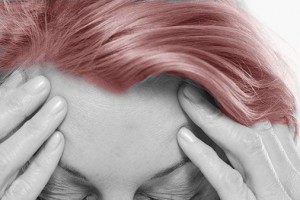
Despite enjoying excellent health, most people go through a period of discouragement at some point in life. And it is here, when we are most defenseless, that stress-induced alopecia comes into play.
In this article, we will discuss the causes that provoke it, the first symptoms to detect it in time, and the treatment that cures it.
What is stress-induced alopecia? What causes it?
Stress-induced alopecia is the loss of hair due to a constant state of anxiety, high nervousness, and mental illnesses. Some of the situations that provoke it are work pressures, grief over the death of a loved one, low self-esteem, anxiety, and depression suffered by the individual for various reasons.
The symptoms of nervous alopecia, as it is identified by both names, are generalized hair loss, without a localized area, decreasing hair density homogeneously across the entire scalp. With stress-induced alopecia, hair falls out imprecisely and similarly from all areas of the head, making it impossible to pinpoint a single portion. Its symptoms are very similar to those of diffuse alopecia.
The origin of this form of hair loss is defined in the person entering a state of continuous apathy or danger, at least this is how the stress is perceived by the individual’s brain, and, consequently, the hair follicles go into permanent stagnation. It is in the telogen phase where they fall and do not regrow as long as the psychic tension persists. The body, in response to certain stimuli, reacts by getting rid of the hair since in situations perceived as life or death, it deems it unnecessary.
How long does it last? Does the lost hair grow back?
Usually, yes. When stress-induced alopecia appears, hair loss is very pronounced, even to the point where almost all the hair can disappear if the crisis lasts several months. Fortunately, once the traumatic situation is overcome and the anxiety problem is resolved, the hair grows back with the same vitality it had before the stressful episode. However, some people experience stress-induced alopecia crises simultaneously with another type of alopecia, and in these cases, the prognosis is not as favorable. Suffering a prolonged nervous crisis when there is already a type of alopecia can cause it to worsen. In these cases, treatment is necessary because when the nervous pressure subsides, the traces of nervous alopecia do not disappear. An example is when a case of alopecia areata and nervous alopecia overlap. When the outbreak due to stress occurs, the hair loss pattern is identical to the pre-existing one. In other words, what could have been a temporary alopecia becomes something deeper that requires treatment from a dermatologist.
Can I tell if it’s stress-induced alopecia, areata, or androgenic?
There are some differences between stress-induced alopecia and other types of alopecia:
* With androgenic alopecia, hair loss lasts for years. During this time, the hair weakens so much that it falls out gradually. Initially, we could say that the hair loss pattern is slower, although this should always be taken with caution as there are different degrees.
* In alopecia areata, the data indicates that an external agent triggers the hair loss. It could be an allergy, contact with a chemical product, etc. It also differs from stress-induced alopecia by the type of hair loss pattern. In areata, it is localized in small areas the size of a coin, although if it progresses for a long time, the small bald spots eventually merge into larger ones.
* In stress-induced alopecia, hair falls out imprecisely and uniformly from the entire head. Within 10 or 15 days, a stressed person may notice that most of their hair disappears. This happens precisely on the days of greatest anxiety or in the following days, but always very close to the psychic episode. Once it is over, within a few weeks the normal thing is for the hair to regrow without the need for treatment.
What is the treatment? Are there products that help?
Stress-induced alopecia, also called nervous alopecia, should be corrected through psychotherapy. Since it is caused by anxiety or altered nervous system states, it is necessary to bring the patient to a state of calm for the hair to grow back normally. Currently, there are no specific drugs or products to alleviate the symptoms beyond what a psychotherapist may recommend to relax. However, some people do not need to see a psychologist or therapist as the crisis is temporary and goes away as it comes.
Do anti-hair loss shampoos or cosmetic products work?
Dermatological or cosmetic products can help in different situations, but it is always advisable to visit a dermatologist for a diagnosis. An anti-hair loss shampoo alone is not capable of stopping alopecia. However, depending on the type of product, it can provide essential elements that serve as a strengthening base. In some cases where hair loss has been prolonged, Minoxidil use may be recommended. This is a product that works very well for a large spectrum of people, although it should be applied with caution as side effects may occur. Always consult a doctor before using medications. Additionally, vitamins and restorative substances sometimes add a degree of acceleration to recovery, not to forget the laser biostimulation that greatly favors the recovery of the tone the hair had before falling out.